Engineering dream fading? 83% graduates in Karnataka lack employable skills

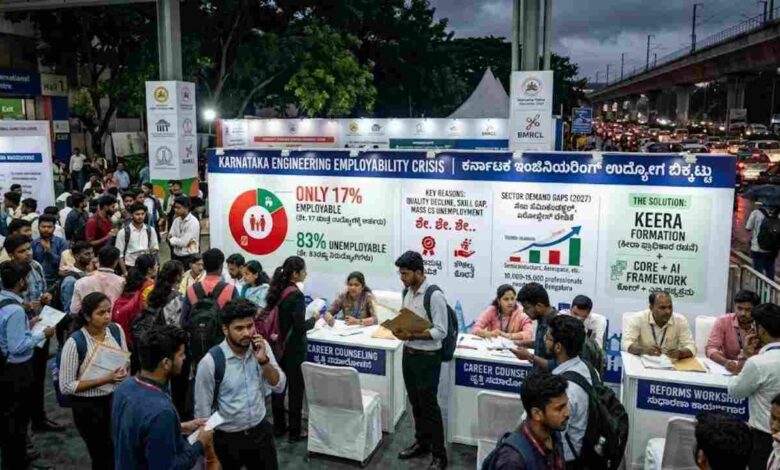
Bengaluru : The assumption that an engineering degree guarantees employment is being increasingly challenged in Karnataka, with a new report revealing that only 17% of graduates are able to secure jobs.
The report, prepared by a committee headed by Prof. Sadagopan, paints a worrying picture of the state’s engineering education system. According to the findings, nearly 83% of engineering graduates are unable to find jobs due to a lack of relevant skills required by industries.
The report identifies multiple factors contributing to the crisis, including declining quality of education in engineering institutions and an imbalance in course preferences.


While computer science remains the most sought-after stream, core disciplines like mechanical, civil and electrical engineering are witnessing reduced enrolment. This has led to a situation where there is an excess of IT graduates but a shortage of skilled professionals in other critical sectors. Experts say there is a clear mismatch between what colleges are producing and what industries need. Sectors such as aerospace, defence, electric mobility and renewable energy are expected to see significant growth, requiring lakhs of skilled professionals in the coming years.
However, current graduates are not equipped to meet these demands, creating a widening employment gap.
To tackle the issue, the Karnataka government is planning structural reforms through the proposed Karnataka Engineering Education Reform Authority. Higher Education Minister M. C. Sudhakar has said that a dedicated legislation will soon be introduced to regulate and improve engineering education.
Among the key recommendations are limiting student intake, enforcing accreditation standards and reducing the number of similar courses offered by a single institution. The introduction of a “Core + AI” model is expected to modernise the curriculum and make graduates more industry-ready.
The report urges students and parents to rethink the conventional approach of choosing engineering—especially computer science without evaluating job prospects.
It calls for a shift towards skill-based learning and informed career decisions aligned with future industry needs.