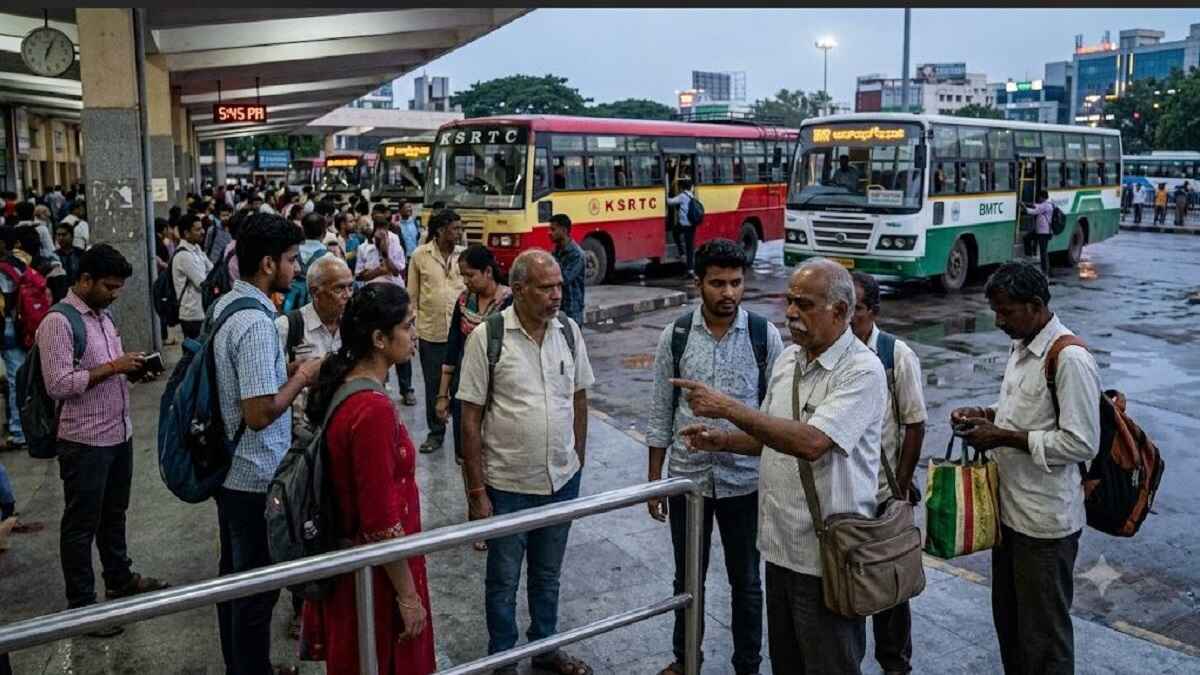
The Karnataka government is likely to revise bus fares for KSRTC, BMTC, NWKRTC, and KKRTC as the four state-run transport corporations continue to grapple with mounting financial losses, Transport Minister Byrathi Suresh has indicated.
Earlier, Minister Byrathi Suresh had informed the Karnataka Legislative Assembly that the Transport Department was facing significant financial losses. He had stated that discussions would be held with officials regarding a possible revision of bus ticket fares. The minister has now indicated that a fare hike is likely to be implemented in the near future.
A high-level committee headed by retired IAS officer Atul Tiwari, which was constituted to examine the financial condition of the state transport corporations and recommend fare revisions, has finalized its report. The report is expected to be submitted to the state government shortly.
The minister said the government would discuss the report with Chief Minister Siddaramaiah before placing it before the State Cabinet for approval. The revised fares will be implemented only after the Cabinet gives its approval.
According to the minister, repeated increases in diesel prices have placed a heavy financial burden on the state’s transport corporations. He said the price of diesel has increased by around Rs 15–16 per litre over the past year, significantly raising operating costs.
The government estimates that the four transport corporations together are bearing an additional annual burden of nearly Rs 8,000 crore due to higher fuel costs. The minister also noted that diesel prices have risen by around Rs 8 per litre over the past seven months, mainly due to global conflicts and economic uncertainties.
This has resulted in an additional financial burden of nearly Rs 40 crore every month, or approximately Rs 480 crore annually, making it increasingly difficult for the corporations to meet their daily fuel expenses.