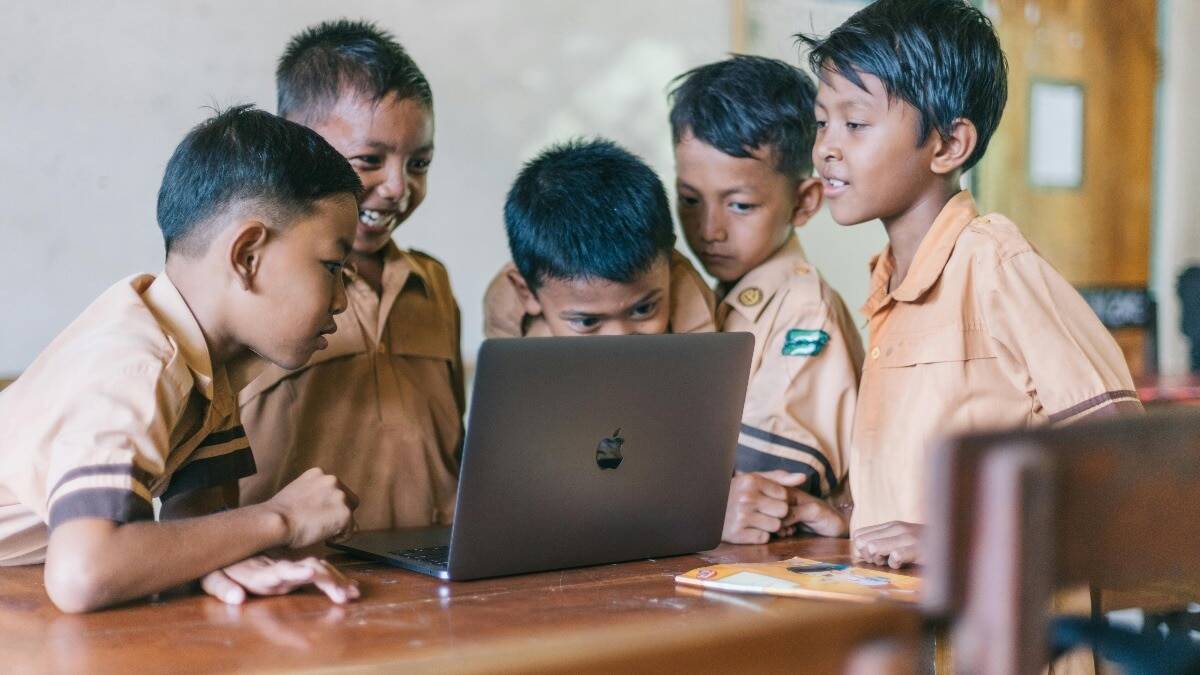
The Karnataka governments plan to introduce artificial intelligence education in schools has opened a wider discussion about how much technology children should use during their formative years. The debate has gained attention after education experts and writers raised concerns about introducing AI without first establishing clear rules for age appropriate use.
Chief Minister D K Shivakumar announced the AI Akshara Abhiyana and Coding Gurukula programmes in August, saying AI education would be introduced in schools from Class 6. The announcement was presented as part of an effort to prepare students for a technology driven future.
However, some education experts and members of a group representing educators and writers have urged the government to examine the possible effects of AI on children before expanding its use in schools. The group has written to the Chief Minister and the Education Minister, seeking a broader discussion on the issue.
The experts have particularly highlighted the age of students, their stage of learning and their mental and intellectual development. Their argument is that technology designed for older learners cannot automatically be treated as suitable for younger children.
One of the major concerns is that excessive dependence on AI could affect the way students learn to think for themselves. If children begin relying on AI to prepare homework, find answers or complete assignments without first attempting the work independently, experts fear that important learning processes could be weakened.
The concern is not simply about whether students use AI, but how they use it. An AI tool can provide information quickly, but students still need to understand the subject, question information, identify mistakes and develop their own conclusions.
UNESCO has also emphasized the importance of keeping human agency at the centre of AI use in education. Its guidance on generative AI calls for age appropriate approaches, protection of privacy, teacher capacity building and policies that promote meaningful and responsible use of the technology.
UNESCOs student AI competency framework also places emphasis on a human centred mindset, ethics, AI knowledge and system design. The framework is intended to help students become responsible users and creators of AI rather than simply passive consumers of AI generated information.
This has become particularly relevant as students are already encountering AI tools outside classrooms. Many young users can access AI applications at home for homework assistance, explanations and writing support. Without guidance, experts say students may find it easier to obtain an answer than to understand how that answer was reached.
The group opposing an unrestricted rollout has therefore called for clear boundaries around AI use at the school level. Teacher supervision, according to the concerns raised, should remain important, particularly when younger students are introduced to these tools.
Teacher preparation is another issue being highlighted. Introducing AI into classrooms requires teachers to understand not only how the technology works but also its limitations, risks and appropriate educational uses.
UNESCOs framework for teachers similarly identifies AI knowledge, ethics, human centred thinking, AI related teaching methods and professional learning as important areas of competency.
A clear state level framework could help schools decide when AI should be used and when traditional learning methods should remain the priority. Such a framework could also address student privacy, the handling of personal information, responsible use and the need for teachers to verify AI generated material.
There is also a larger question about the role AI should play in education. UNESCO has said AI should strengthen human decision making and intellectual development rather than undermine or replace them. Its guidance also notes concerns that excessive dependence on generative AI could weaken independent thought and self directed inquiry.
For Karnataka, the discussion comes at a time when the government is actively looking at technology and coding as part of school education. The proposed programmes are intended to prepare students for changing employment and technology environments, but their implementation will determine how AI fits into everyday classroom learning.
The debate therefore does not necessarily centre on whether students should know about artificial intelligence. Instead, it concerns the age at which AI should be introduced, what students should be allowed to do with it and how teachers should supervise its use.
Education experts have asked the government to consider these questions before expanding the programme. They want decisions to be supported by clear educational objectives rather than simply following the rapid growth of AI technology.
For students, the most important part of the discussion remains learning itself. AI can provide assistance, but classroom education also involves curiosity, discussion, writing, reasoning, problem solving and learning from mistakes. Any school policy will need to consider how technology can support those abilities without taking their place.
The government now faces the task of developing a framework that addresses both the opportunities and concerns surrounding AI in schools. A carefully planned approach could allow students to learn about emerging technology while maintaining the central role of teachers and independent thinking.