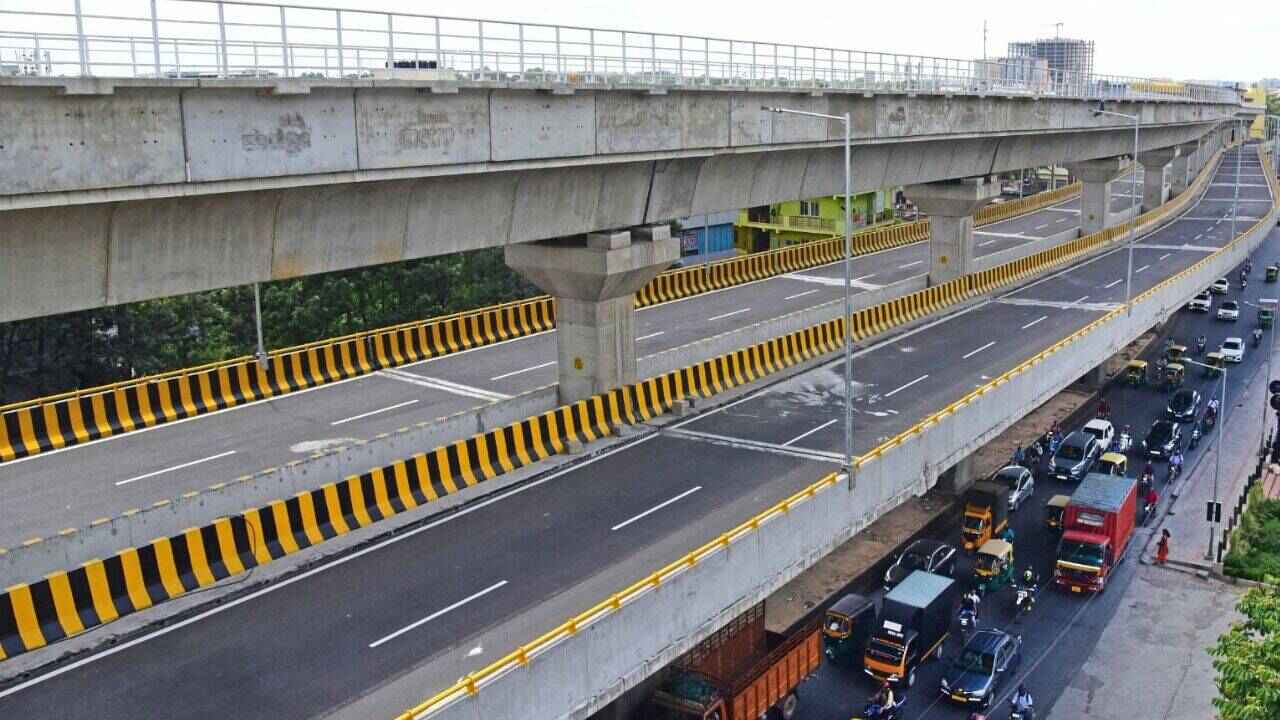
The long debated double decker plan linked to Bengaluru Metro Phase III is now heading towards a possible change in scope. Instead of building a continuous structure across around 37 kilometres, BMRCL is considering shorter stretches at locations where traffic congestion is particularly severe.
The Bangalore Metro Rail Corporation Limited is expected to place the revised proposal before its board for a final decision. The latest move follows recommendations from engineering consultancy RITES and findings from the IISc Sustainable Transportation Lab.
The original proposal involved building a road flyover below the Metro viaduct along a substantial portion of the Orange Line. The road component was estimated to cost around Rs 9700 crore, with the state government agreeing to bear that cost.
The idea was introduced as part of efforts to address Bengaluru’s persistent traffic congestion. By combining road and Metro infrastructure in a single elevated structure, planners had hoped to make better use of limited road space while expanding public transport.
However, the proposal has faced technical and transport related questions. RITES was asked to examine the feasibility of the arrangement, and its assessment raised concerns about building a continuous elevated road alongside the Metro corridor.
One concern highlighted in the assessment is that adding substantial road capacity could encourage continued private vehicle use. That could work against the wider objective of Metro expansion, which is intended to encourage people to shift towards public transport.
The engineering requirements are another challenge. At some locations, the combined road and Metro structure could reach around 35 metres in height to cross existing infrastructure. Such a design would make construction and operations more complicated in already crowded parts of Bengaluru.
Financial considerations have also entered the discussion. According to the reported assessment, the economic internal rate of return for the Metro only project was around 17 percent, while including the double decker component brought the figure below the 14 percent benchmark cited in the report.
These concerns have pushed BMRCL towards a more targeted approach. Rather than constructing the road structure throughout the corridor, the corporation is considering double decker sections only at major traffic bottlenecks.
Locations being considered include Hebbal, BEL Circle, Goraguntepalya, Sumanahalli Cross, Nagarbhavi, Nayandahalli and Kamakya Junction. Sarakki Junction, the Delmia flyover area and the Vega City Mall stretch have also been identified in the discussions.
The wider Metro Phase III project covers around 45 kilometres across two corridors. One connects Kempapura with JP Nagar along the Outer Ring Road, while the other runs between Hosahalli and Kadabagere along Magadi Road. The Union government approved the Phase III project in August 2024.
Prime Minister Narendra Modi laid the foundation stone for Phase III in August 2025, but construction has not yet begun as authorities continue to examine the infrastructure changes associated with the double decker proposal.
The double decker idea has also received mixed reactions from commuters and transport observers. Some see additional road capacity as a possible way to address congestion, while others have questioned whether building more road space alongside a Metro corridor could encourage greater dependence on private vehicles.
The latest direction indicates that BMRCL is attempting to balance both requirements rather than treating the road and Metro structures as a single continuous project. Shorter stretches could allow the agency to focus on junctions where traffic pressure is particularly high.
For Bengaluru commuters, the final decision will be important because the scope of the road component could influence both construction timelines and the design of several major junctions. A shorter structure would also represent a significant change from the original 37 kilometre proposal.
The BMRCL board is expected to examine the revised plan before the next stage of the project moves forward. Until that decision is taken, the exact length and locations of the double decker sections cannot be considered final.
The debate around the project ultimately reflects a larger challenge for Bengaluru. The city needs additional transport capacity, but planners also have to consider how new roads affect public transport usage, construction complexity, costs and long term traffic patterns.
For now, the proposed shift from a 37 kilometre continuous double decker structure towards shorter stretches marks a significant change in the approach to Bengaluru Metro Phase III. The final shape of the project will depend on the decision taken by BMRCL and the subsequent approvals required for implementation.