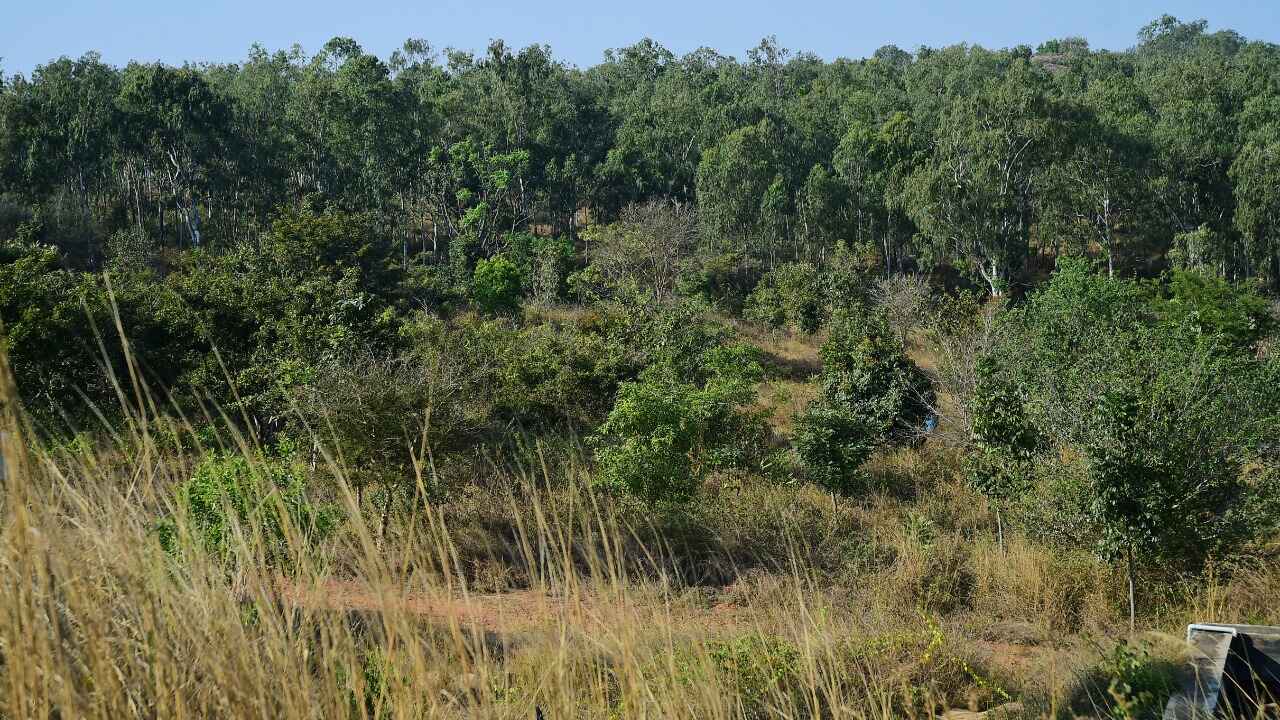
A large scale cleanup operation at the edge of Turahalli forest in Bengaluru has drawn attention to the amount of waste being dumped near environmentally sensitive areas. More than two tonnes of waste were removed during the Clean Up Turahalli campaign, which brought together residents, volunteers and environmental campaigner Surendra Singh Choudhary, popularly known as Bittu Tabahi.
The four hour campaign was organised in Banashankari Sixth Stage from 8 am. The Indian Garage Co conducted the drive in association with Indus Herbs and the Greater Bengaluru Authority. Volunteers worked together to clear accumulated waste from the forest boundary and surrounding area.
The cleanup revealed a troubling mix of discarded material. Plastic waste, medical waste, sanitary waste, poultry waste and other rubbish were found at the site. The presence of such material near a forest boundary raised concerns among participants about the impact of careless dumping on the local environment.
The quantity of waste was substantial enough to require the use of heavy equipment for clearing some of the older accumulated piles. Volunteers and organisers spent several hours removing waste and restoring the area around the forest boundary.
Senior environmental expert A N Yellappa Reddy and India Plog Run representative Ramakrishna Ganeshan were also involved in the campaign. Their participation added an environmental perspective to an initiative largely driven by local community involvement.
For Bittu Tabahi, the Bengaluru visit marked an important step in taking his cleanliness campaign beyond Madhya Pradesh. He has gained public attention for his efforts to encourage people to take greater responsibility for the condition of natural spaces.
Speaking after the Turahalli campaign, Bittu Tabahi expressed disappointment over the condition of the site. He said he had expected Bengaluru, widely recognised for its technology industry, to show stronger environmental discipline. Instead, the waste found near the forest boundary left him concerned about the lack of civic sense.
He also used a pointed comparison while talking about the issue, suggesting that people might treat trees differently if nature itself could communicate with them through technology. His remarks reflected the broader message behind the campaign, which is that protecting public spaces cannot depend entirely on government agencies.
The condition of Turahalli was also placed in a historical context during the event. Yellappa Reddy said the area had played an important role in the region’s water system several decades ago. He described its transformation into a place where waste is dumped as a serious environmental concern.
According to Reddy, strict action by the forest department has helped keep the interior portions of Turahalli Reserve Forest relatively protected from dumping. However, the condition along the surrounding boundary shows that environmental protection also requires cooperation from residents and visitors.
Bittu Tabahi became widely known after his environmental work in Madhya Pradesh attracted attention on social media. Surendra Singh Choudhary, a young BSc student from Biaora in Rajgarh district, became known for his efforts to restore the Ajnar River, which had accumulated large quantities of waste.
His work began after he noticed the deteriorated condition of the river near a local temple. What started as a personal effort later attracted wider public attention as videos of the cleanup circulated online.
The campaign eventually received praise from prominent personalities, including industrialist Anand Mahindra, former England cricketer Kevin Pietersen and Madhya Pradesh Chief Minister Mohan Yadav. Their recognition helped bring wider attention to the young environmental campaigner and his efforts.
The Turahalli campaign now adds Bengaluru to that journey. Rather than focusing only on removing waste after it has accumulated, participants stressed the need for people to stop treating forests, lakes and other natural areas as convenient dumping grounds.
The discovery of medical and sanitary waste was particularly concerning because such material requires responsible disposal. Plastic waste can also remain in the environment for long periods and may affect wildlife and surrounding ecosystems when dumped carelessly.
The cleanup has therefore served as more than a one day sanitation exercise. It has highlighted the continuing challenge of maintaining areas around Bengaluru’s natural spaces, where increasing urban activity can put additional pressure on the environment.
The organisers and volunteers hope that the campaign will encourage residents to think twice before disposing of waste in open areas. Keeping forest boundaries clean ultimately requires regular civic action as well as responsible behaviour from the public.
The removal of more than two tonnes of waste has given the Turahalli forest boundary a cleaner appearance, but the larger challenge remains preventing similar waste piles from returning. For Bengaluru, the campaign has once again brought civic responsibility and environmental protection into the spotlight.