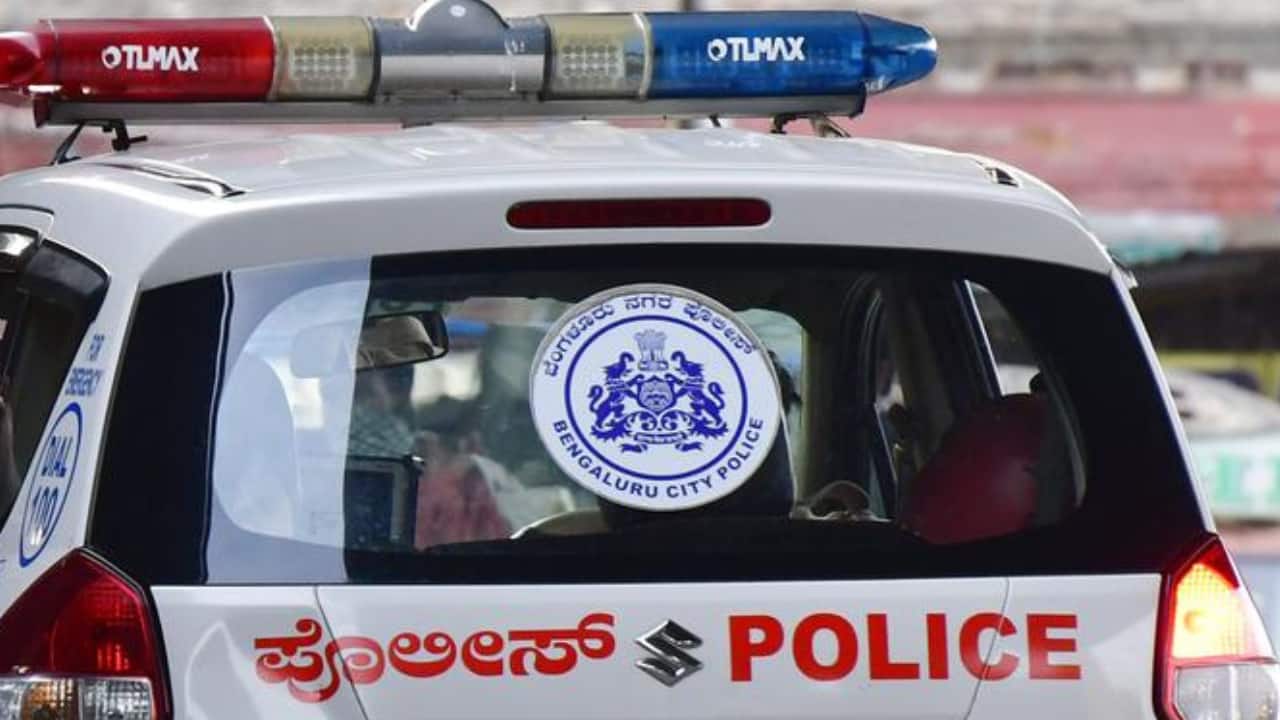
A small Ganesh pendant found near a badly decomposed body became one of the key clues that helped Bengaluru police solve a difficult woman death case in Sampigehalli.
The body was discovered when workers were cleaning an empty site in MS Nagar Agrahara Layout under the Greater Bengaluru Authority limits. Because the body had decomposed extensively, establishing the identity of the woman initially proved difficult for investigators.
Police did not have a clear identification to begin with. Instead, investigators had to work with whatever clues remained at the location. Clothing, bangles and a Ganesh pendant found near the body eventually helped them narrow down the search.
The pendant proved particularly useful because investigators learned that similar pendants were commonly worn by people from Odisha. The information prompted police to focus on people from Odisha living around the area where the body was found.
Investigators then collected details of people living within roughly 1.5 kilometres of the site. During this exercise, police identified the phone numbers of eight women from Odisha living around MS Nagar.
One of the numbers belonged to a woman named Anusuya. Interestingly, the number differed by only one digit from a mobile number obtained through the clothing clue. This similarity gave investigators an important new direction.
The investigation eventually led police to identify the deceased as 28 year old Anusuya, who was originally from Odisha.
Police then turned their attention towards her husband, 32 year old Sagar Chandra Rawat.
The couple had reportedly met in Bengaluru, fallen in love and married. Both were working at separate hotels in the city. According to the police investigation, financial issues had frequently caused disagreements between them.
Investigators suspect that one such dispute on August 11 escalated and resulted in Anusuyas death. Police allege that Sagar was responsible for her death.
After the incident, police say Sagar kept the body inside their residence for several days. He later wrapped it in bedding and allegedly abandoned it at the vacant site near MS Nagar Agrahara Layout.
Investigators also found that the accused allegedly returned to the area repeatedly to check whether anyone had discovered the body. This behaviour later became another part of the investigation.
The case came to light only when the owner of the vacant property arranged for workers to clean the site. The workers discovered the body and alerted the authorities, following which Sampigehalli police began their investigation.
Identifying the woman was the first major challenge. With the body in an advanced state of decomposition, conventional identification methods were difficult. Police nevertheless preserved the available clues and continued looking for links between the objects found at the site and missing persons reports.
The clothing tag provided another lead. Investigators contacted the relevant retail outlet and obtained a mobile number associated with the purchase information. However, repeated attempts to contact the number did not produce a useful response.
The Ganesh pendant then provided the breakthrough that investigators needed. After learning about its possible connection with people from Odisha, police began checking the details of Odisha origin residents living close to the location.
The investigation subsequently brought Anusuya into focus. Her mobile number and the earlier number obtained through the clothing clue were almost identical, giving police sufficient reason to examine her circumstances more closely.
Investigators then used mobile tower data to trace her husband Sagar. When police approached him, he allegedly attempted to leave for Odisha.
At that stage, Sagar reportedly told police that his wife was missing and that he needed to travel to Odisha to look for her. Investigators, however, continued checking his account against other information gathered during the investigation.
Police also obtained information from the hotel where the couple worked. Staff reportedly knew about disagreements between the two, providing investigators with additional background about their relationship.
Sagar was subsequently taken into custody and questioned. According to police, he eventually admitted to killing his wife and abandoning her body at the vacant site.
The case shows how investigators can sometimes build a case from seemingly minor clues when direct identification is difficult. In this instance, the clothing tag, mobile numbers, community information and tower data gradually connected the unidentified woman to her family and then to the person police suspected.
The investigation also highlights the importance of information gathered from the surroundings of a crime scene. What initially appeared to be an unidentified body in an empty site eventually led police through several separate clues to the identity of the woman and the circumstances surrounding her death.
The allegations against the accused remain subject to the legal process. Police have arrested Sagar in connection with the case, while further investigation and legal proceedings will determine the evidence and responsibility involved.
For Sampigehalli police, the investigation began with an unidentified body and very limited information. A Ganesh pendant, a clothing tag and a small difference in two mobile numbers ultimately helped investigators put together the missing pieces of the case.