NASA Alerts Five Asteroids Passing Near Earth Triggering Fresh Concern Over Space Threats
NASA has issued a warning as five asteroids of different sizes are set to pass close to Earth, highlighting ongoing space monitoring efforts and reminding that even non impact flybys require close scientific observation.


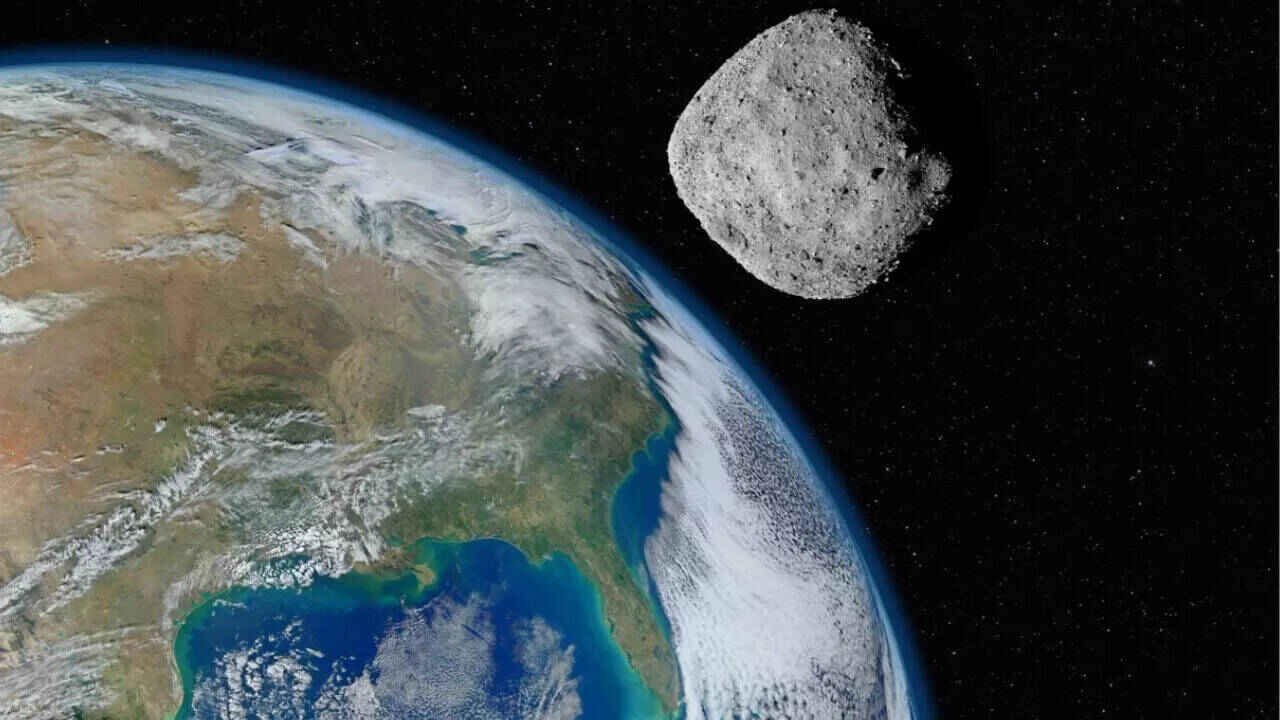
The threat of asteroids passing near Earth is something scientists continue to monitor closely, as even a small change in their trajectory can raise concerns. NASA has once again issued an alert after identifying five asteroids that are expected to pass near our planet within a short time frame. These space objects travel continuously through the solar system and occasionally come close to Earth, prompting regular tracking by space agencies.
According to NASA’s Jet Propulsion Laboratory, these five asteroids are expected to make their closest approach around May 9. While none of them are predicted to collide with Earth, their movement is being carefully observed due to their proximity and varying sizes.
One of the asteroids, named 2026 JO, is approximately 27 feet in size, roughly similar to a small bus. At its closest point, it will pass at a distance of around 134000 kilometers from Earth, which is still considered safe in astronomical terms but close enough to be tracked continuously.
Another asteroid, 2026 JY, is slightly smaller at about 22 feet. It is expected to pass at a distance of nearly 1110000 kilometers from Earth. Scientists classify such objects as near Earth objects, even when they remain far enough to pose no immediate threat.


Adding to the list is asteroid 2026 JQ, which measures about 29 feet, comparable to the size of a small house. When it makes its closest approach, it will be around 1970000 kilometers away from Earth. Despite its distance, its movement is part of NASA’s routine monitoring system for planetary safety.
On the same day, asteroid 2020 GE3 is also expected to pass by. This one is significantly larger, measuring around 67 feet. It is believed to be roughly the size of a house and will come within approximately 4260000 kilometers of Earth during its flyby.
The fifth object, 2026 JB, is the largest among the group, with an estimated size of 160 feet. It will pass Earth at a distance of about 860000 kilometers. Even though this distance is safe, objects of this size are taken seriously due to the potential damage they could cause in the rare event of an impact.
NASA has clarified that none of these asteroids pose a collision risk to Earth. However, space experts emphasize that continuous monitoring is essential because any shift in orbit caused by gravitational forces could alter their paths over time.
While these flybys are routine in cosmic terms, they serve as a reminder of how active and unpredictable space can be. Scientists continue to study such near Earth objects to improve early warning systems and better understand long term space risks.