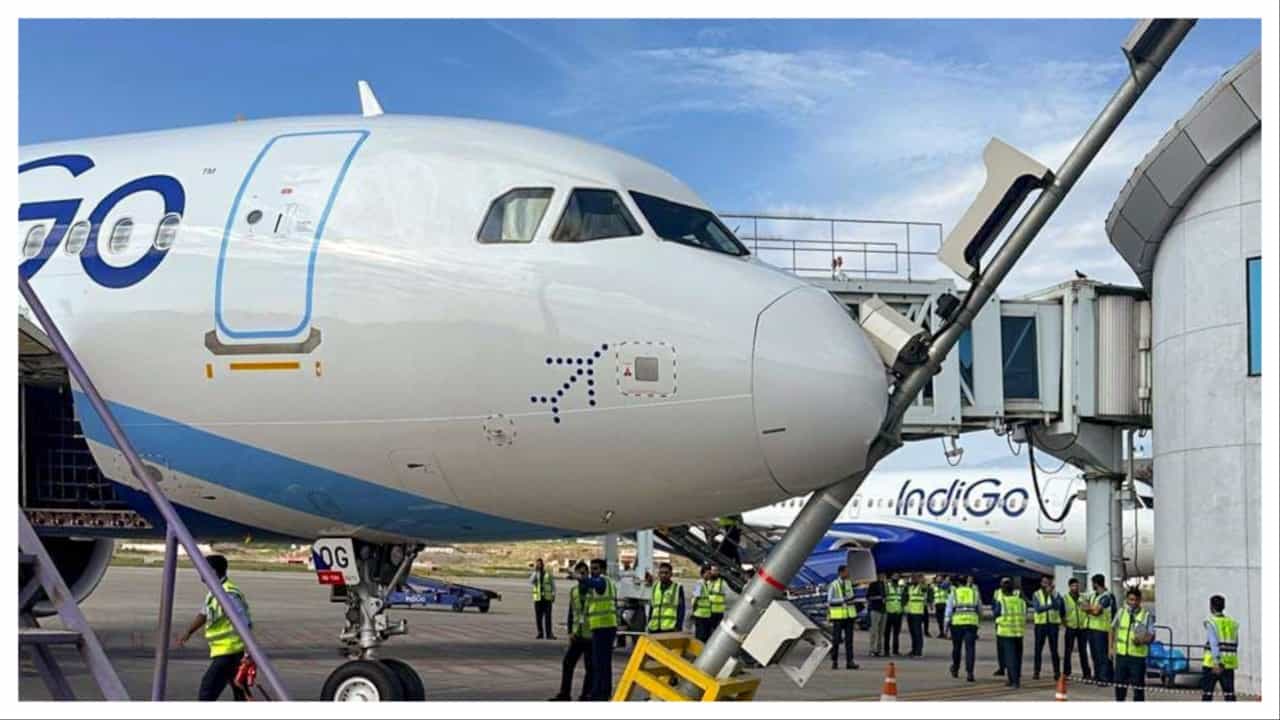
An IndiGo flight arriving at Kempegowda International Airport in Bengaluru experienced an unusual runway contact during landing, prompting the airline to remove the aircraft from service for a detailed technical inspection.
The flight, identified as 6E6542, was operating from Guwahati to Bengaluru. According to information released by IndiGo, the aircraft encountered an abnormal runway contact while attempting to land at the airport.
The incident occurred amid strong winds in Bengaluru. Officials said the aircraft did not complete its first landing attempt and subsequently landed during a second attempt. The exact circumstances surrounding the runway contact are expected to be examined by aviation authorities.
There were no reports of injuries among passengers or crew members. After the aircraft reached the airport, passengers were safely taken off the plane.
IndiGo said the aircraft was temporarily removed from operations as a precaution. A maintenance team is carrying out the required inspections to determine whether the aircraft sustained any damage during the incident.
The airline also said the relevant authorities had been informed in accordance with aviation procedures. The aircraft will only return to service after the necessary checks are completed and it is cleared for operation.
The incident is being described as a tail strike. The term refers to a situation in which the rear portion of an aircraft makes contact with the runway during takeoff or landing.
A tail strike can occur for several reasons. During takeoff, the aircraft nose may be raised too quickly or beyond the appropriate angle, causing the rear section to move closer to the runway. During landing, an aircraft can also make contact with the runway if its attitude or descent conditions result in the tail getting too close to the surface.
Weather can sometimes become an additional factor. Strong winds can make landing conditions more challenging and require pilots to make careful adjustments during the final approach. Runway characteristics, aircraft weight, approach speed and the aircrafts position during touchdown can also be relevant when investigators examine such an event.
A tail strike does not automatically mean that an aircraft has suffered serious damage. However, even a suspected contact requires proper inspection because parts of the aircraft structure may need to be examined before the aircraft can safely operate again.
This is why airlines normally follow maintenance procedures after such incidents. Engineers inspect the relevant sections of the aircraft and carry out additional checks before deciding whether it can return to regular service.
The incident at Bengaluru airport is also expected to be reviewed by the Directorate General of Civil Aviation. If a formal investigation is initiated, officials can examine flight data, weather conditions, aircraft records, runway information and the circumstances surrounding the landing.
The investigation would help establish whether the runway contact was caused primarily by weather conditions, aircraft handling, operational factors or a combination of circumstances.
The latest incident comes after another IndiGo related occurrence earlier this month. An IndiGo aircraft at Srinagar airport reportedly came into contact with a Visual Docking Guidance System structure while being positioned during parking.
That earlier incident also did not result in injuries to passengers or crew, according to reports. The two events are separate and the circumstances surrounding each incident will need to be assessed independently.
For passengers travelling on IndiGo, the Bengaluru incident is unlikely to mean that the aircraft will immediately return to service. The technical inspection is intended to establish the condition of the aircraft before any further flight is permitted.
The focus now remains on the maintenance assessment and any findings from aviation authorities. Until those checks are completed, the exact cause of the tail strike cannot be confirmed.